Find the right transfer switch for your generator setup. Select your panel size, generator, and circuits — get a specific amp rating recommendation with cost estimates and product examples.
3 types
interlock, manual, auto
14 circuits
to choose from
Cost estimates
included
🔌 Transfer Switch Configuration
watts
Circuits to Protect
5 circuits selected
HVAC / Central AC
40A
3500W
RefrigeratorCRITICAL
20A
600W
Sump PumpCRITICAL
20A
1000W
Well PumpCRITICAL
20A
1000W
Furnace / Air HandlerCRITICAL
15A
600W
Lighting Circuit 1CRITICAL
15A
720W
Lighting Circuit 2
15A
720W
Garage / Workshop
20A
1200W
General Outlets (Bed/Bath)CRITICAL
20A
1500W
General Outlets (Living)
20A
1500W
Microwave / Small Kitchen
20A
1200W
Electric Water Heater
30A
4500W
Electric Dryer
30A
5400W
Medical EquipmentCRITICAL
20A
500W
How a Transfer Switch Works
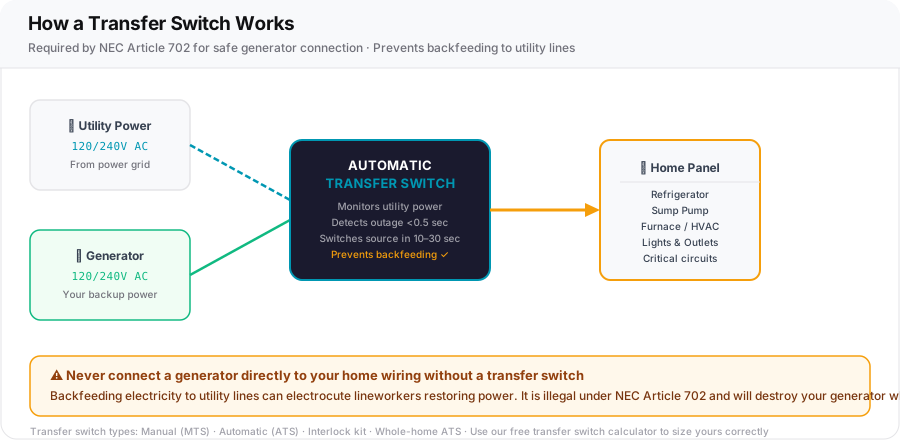
The transfer switch sits between the utility grid and your home panel — it prevents backfeeding by ensuring only one source powers your circuits at a time.
How a Transfer Switch Works
Prevents backfeeding — legally required for generator-to-home connections
Normal operation
Outage path
Protected output
Transfer Switch Safety: Why It's Non-Negotiable
Every year, utility workers are injured or killed by backfed electricity from improperly connected generators. When you connect a generator to your home's wiring without a transfer switch, the electricity flows backward through your utility meter and onto the neighborhood power lines — which lineworkers assume are de-energized when working to restore power.
Beyond the safety hazard, backfeeding can also destroy your generator when utility power is restored. The interaction between utility frequency and generator output can cause immediate, catastrophic damage to the generator's alternator. A proper transfer switch costs $75–$3,000 depending on type — far less than a new generator or legal liability.
Choosing Between Interlock Kit, Manual, and Automatic
The right transfer switch type depends on three factors: how quickly you need power after an outage, how many circuits you need to protect, and your budget.
Type
Switchover Time
Circuits
Cost Installed
Best For
Interlock Kit
1–5 minutes (manual)
All panel circuits
$75–$300
DIYers, budget installs
Manual Transfer Switch
1–3 minutes
6–10 dedicated
$400–$900
Essential circuit protection
Automatic Transfer Switch
10–30 seconds
Whole panel or partial
$1,000–$3,000
Standby generators, medical
For most homeowners with a portable generator for emergency backup, a 6–10 circuit manual transfer switch or an interlock kit provides excellent protection at a reasonable cost. The automatic transfer switch becomes essential when you have a standby generator — since the generator starts automatically, you need the switch to connect automatically too.
Permits and Code Compliance
Transfer switch installation falls under electrical work in most jurisdictions, requiring a permit from your local building department. The permit process involves:
Applying for an electrical permit (typically $50–$200)
Having a licensed electrician do the installation (or submitting DIY documentation)
Scheduling an inspection from the building department
Receiving sign-off on the completed installation
Skipping the permit creates liability issues if there's ever an electrical fire — insurance companies can deny claims for work done without permits. The permit process also ensures the installation is done safely and correctly.
Code requirement: Transfer switches for residential backup generators are governed by NEC Article 702 — Optional Standby Systems. Installation must be performed by a licensed electrician. Connecting a generator without a transfer switch (a "suicide cord") violates NEC and is a danger to utility workers.
How a transfer switch works — utility and generator connect to the ATS, which connects to your home panel. Required by NEC Article 702.
Transfer Switch Guide
Manual vs. Automatic Transfer Switch
A manual transfer switch (MTS) requires you to physically flip a switch to move power from utility to generator — typically a 10–15 minute process. An automatic transfer switch (ATS), however, detects the utility outage and starts the generator and transfers power within 10–30 seconds, without any human action. Consequently, an ATS is essential for homes with standby generators, where the entire value proposition is automatic protection. Furthermore, if you use a portable generator, a manual transfer switch ($400–$1,200 installed) is sufficient and significantly cheaper.
Transfer Switch Sizing — The Critical Rule
Your transfer switch must be rated at or above your main electrical panel amperage. For example, a 200A main panel requires a 200A-rated transfer switch — a 100A transfer switch will overheat and fail under high load. However, the transfer switch can be smaller than your panel if you are only protecting selected circuits (a partial-house manual transfer switch). Therefore, determine whether you want whole-home or essential-only protection before selecting a transfer switch size, as this decision significantly affects cost.
The Interlock Kit Option
An interlock kit is a metal bracket installed directly on your main panel that mechanically prevents both the main breaker and the generator inlet breaker from being on simultaneously. This is a legal, NEC-compliant alternative to a transfer switch for portable generator use, and it costs significantly less ($50–$150 for the kit plus installation labor). However, interlock kits require that you manually select which circuits to power from the generator by turning individual breakers on or off — a manual process that a transfer switch eliminates. Additionally, not all panels are compatible with interlock kits, and the electrical work still requires a licensed electrician.
Free Tool
Size Your Generator First
Make sure your generator is properly sized before selecting a transfer switch — our main calculator handles running and surge watts.