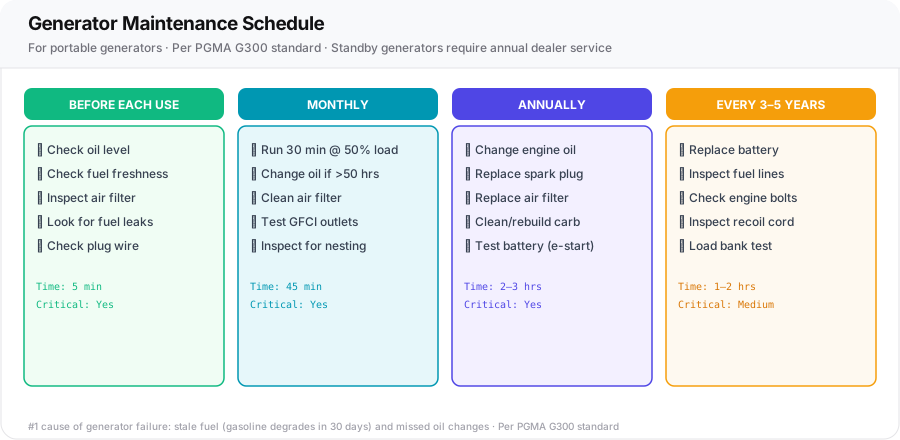
Generator Maintenance Schedule

Generator Maintenance Schedule & Checklist

The complete maintenance schedule for portable and standby generators — by frequency, by generator type, with common failure points and the tasks that prevent them.

21 tasks
Portable checklist items
20 tasks
Standby checklist items
30 min/month
Average time investment

Quick Answer

Portable generators: monthly load run + annual oil change, spark plug, and air filter. Before each use: check oil and fuel freshness. Standby generators: weekly exercise run confirmation + annual dealer service (required for warranty). Both: run under load monthly even with no outages — carburetor gumming from inactivity is the #1 cause of 'won't start when needed.'

Every 50 hrs
Portable oil change
Annually
Standby service
30 min min
Monthly run time
Every 3 yrs
Battery replacement
Published Updated Reviewed by Generator Size Calculator Editorial Team

Key Takeaways

  • The #1 cause of generator failure during outages: stale fuel and missed oil changes — both 100% preventable.
  • Run your generator under load for at least 30 minutes monthly, even when no outage has occurred.
  • Standby generator annual service is required to maintain warranty on Generac and Kohler units.
  • Replace the battery every 3 years proactively — it will fail during a cold-weather outage otherwise.
  • Drain fuel or add stabilizer before storage — ethanol deposits clog carburetor jets within 30 days.

Portable Generator Maintenance Schedule

Covers conventional, inverter, and dual-fuel portable generators. Always consult your owner's manual for model-specific intervals — these are standard industry guidelines.

Before Each Use

Check oil level

Oil should be between MIN and MAX marks on dipstick. Low oil is the #1 cause of generator engine failure.

Check fuel level and freshness

Gasoline over 30 days old degrades and clogs carburetors. Use fresh fuel or add stabilizer. Propane has no freshness issue.

Inspect air filter

Remove and inspect — tap gently to remove dust. Replace if visibly dirty or oil-fouled.

Visual inspection

Check for fuel leaks, oil leaks, damaged wiring, and rodent nesting (a real issue in stored generators).

Check spark plug wire connection

Confirm the plug wire is firmly seated — vibration can loosen it during storage.

Monthly (or Every 25–50 Operating Hours)

Change engine oil

Most portable generators require oil changes every 20–50 hours or annually, whichever comes first. Use SAE 10W-30 (check your manual). Do not skip — oil darkens and loses viscosity quickly in air-cooled engines.

Run at 50% load for 30 minutes

Prevents carburetor gumming and keeps the engine seals lubricated. Running monthly is critical even when no outage occurs.

Clean air filter

Foam filters: wash with soap and water, dry completely, re-oil lightly. Paper filters: tap clean or replace.

Test GFCI outlets

Press the TEST button on any GFCI outlets on the generator. They should trip. Press RESET to restore. Faulty GFCIs are a common service issue.

Annually (or Every 100 Operating Hours)

Replace spark plug(s)

A worn spark plug causes hard starting, rough running, and fuel waste. Cost: $3–$8 per plug. Use the OEM-specified plug for your model.

Replace air filter element

Paper air filters should be replaced annually regardless of appearance — they restrict airflow as they age even when visually clean.

Clean/rebuild carburetor if stored

Ethanol fuel leaves deposits in carburetor jets. If the generator sat over winter with fuel in the tank, cleaning the carburetor prevents hard-starting or no-start conditions.

Flush and replace fuel (stored generators)

Drain old fuel completely. Run the carburetor dry after draining, or use a fuel stabilizer like Sta-Bil (1 oz per 2.5 gallons) if leaving fuel in the tank.

Inspect and replace fuel filter

Inline fuel filters ($3–$10) prevent carb contamination. Replace annually on gas models.

Check battery (electric start models)

Test battery voltage: should be 12.4–12.6V at rest. A battery below 12.0V may fail to start the generator during an outage. Replace every 3 years proactively.

Load test at full capacity

Connect a load tester or actual high-wattage loads and confirm the generator reaches and sustains rated output. This catches failing voltage regulators before an outage does.

Inspect and clean fuel cap vent

A clogged fuel cap vent causes fuel starvation under load (engine surges and dies). Clean the vent with compressed air.

Every 3–5 Years

Replace the battery (electric start)

Even a healthy-seeming battery will eventually fail to start a cold generator. Replace proactively every 3 years.

Inspect and replace fuel lines

Rubber fuel lines degrade from ethanol and UV exposure. Cracked lines are a fire hazard.

Check and re-torque engine bolts

Vibration loosens hardware over time. Check all accessible engine and mounting bolts.

Inspect recoil starter mechanism

Test the pull cord mechanism. Replace the rope if frayed — it will break at the worst possible time.

Get Annual Maintenance Reminders

We'll send a reminder each spring with the complete maintenance checklist for your generator type — never miss a service interval.

📄

Get the Free Generator Sizing Checklist

A printable PDF checklist covering generator sizing, fuel storage, transfer switch requirements, and emergency prep — sent straight to your inbox.

🎁 Free Generator Maintenance Calendar PDF included

No spam. Unsubscribe anytime. We respect your privacy.

Standby Generator Maintenance Schedule

Covers Generac Guardian, Kohler RESAL, Briggs & Stratton, and equivalent residential standby units. Annual service must be performed by an authorized dealer to maintain warranty.

Weekly (Automatic Exercise)

Confirm automatic exercise run

Standby generators run a self-test weekly (typically 10–20 minutes at no or light load). Confirm yours is actually running — listen for it or check the generator's run-hour counter.

Check for alert lights or fault codes

After each exercise run, visually inspect the generator's control panel. Any illuminated warning LEDs warrant investigation — do not ignore fault codes.

Check battery indicator (if displayed)

Some models display battery voltage on the panel. Values below 12.0V during idle mean the charger or battery is failing.

Monthly

Test transfer switch operation

Some homeowners manually trigger an outage test quarterly (switch main breaker off, wait for generator to come online, restore utility). Confirm all designated circuits receive power.

Check for fuel leaks (propane / natural gas)

With the generator running, use a gas leak detector or soapy water on all connections. Any bubbling indicates a leak — shut down and call your dealer.

Verify OnCue Plus / Mobile Link alerts

Confirm your remote monitoring app is receiving updates from the generator. A disconnected app means you will not be notified of faults.

Inspect for animal nesting

Squirrels, mice, and wasps nest in standby generators during dormant periods. Monthly inspection catches infestations before they damage wiring.

Annually (Dealer Service — Required for Warranty)

Change engine oil and oil filter

Generac: every 100–125 hours or annually. Kohler RESAL: every 200 hours or annually. Use the manufacturer-specified oil type — incorrect oil viscosity causes premature wear.

Replace air filter

Annual replacement regardless of appearance. Restricted airflow reduces generator output and increases fuel consumption.

Replace spark plugs

Platinum-tipped plugs may last 2 years; standard plugs should be replaced annually.

Test battery and replace if weak

Standby generator batteries fail in cold weather — the same conditions that cause outages. Test battery cold-cranking amps annually; replace every 3 years proactively.

Inspect and clean fuel system

Check fuel lines, connections, and regulator. Propane regulators should be inspected by a licensed gas technician.

Check cooling system (air-cooled)

Clean debris from intake and exhaust screens. Blocked airflow causes thermal shutdown under load.

Firmware and control board update

Generac and Kohler periodically release firmware updates that improve performance and fix operational issues. Authorized dealers apply these during service visits.

Verify automatic transfer switch operation

Technician confirms the ATS detects simulated outage, transfers load, and retransfers when utility returns — with measured transfer times.

Load bank test

Some dealers perform a full-load test (75–100% of rated capacity) to confirm output quality. Recommended every 2–3 years if the generator sees few actual outages.

Every 2–3 Years

Replace battery proactively

Even if the battery tests healthy at 3 years, replacement is cheap insurance against a cold-weather no-start.

Inspect and service the transfer switch

ATS contacts wear with repeated switching. A dealer inspection every 2–3 years catches contact erosion before transfer failures occur.

Check and clean engine block heater

Liquid-cooled models have a coolant block heater that maintains engine temperature. Confirm it is drawing current and functioning.

Repaint or touch up enclosure if needed

Aluminum and steel enclosures can develop oxidation in coastal or high-humidity environments. Touch-up paint prevents corrosion from spreading to seams and fasteners.

Common Generator Failures — and How to Prevent Them

Every failure below is predictable and preventable with the maintenance schedule above.

FailurePrevention
Won't startFresh fuel + monthly run + annual battery test
Runs then shuts offCheck oil before each use; clean fuel cap vent annually
No power outputAnnual load test catches AVR degradation early
Surging under loadDrain fuel when storing; run on fresh fuel
Won't transfer (standby)Monthly exercise runs + annual ATS inspection
Excessive fuel consumptionAnnual air filter + spark plug replacement

How to Store a Generator for Winter

Improper storage is the single biggest cause of generator failure. Ethanol in modern gasoline separates and leaves deposits in carburetor jets within 30 days. Here is the correct storage process:

  1. Add fuel stabilizer at the correct ratio (1 oz per 2.5 gallons of fuel). Run the generator 5–10 minutes so treated fuel reaches the carburetor.
  2. Change the oil while the engine is warm — hot oil drains contaminants better. You want clean oil sitting over winter, not degraded oil that forms sludge.
  3. Fog the cylinder — remove the spark plug, spray a small amount of clean motor oil into the cylinder, pull the recoil 2–3 times to coat cylinder walls, reinstall the plug. Prevents corrosion on bare metal surfaces.
  4. Disconnect or tend the battery (electric-start models) — connect to a battery tender at 0.5–1A to maintain charge without overcharging.
  5. Cover and store in a dry, ventilated location. Cover with a breathable generator cover (not an airtight tarp — condensation causes corrosion).

Generator Maintenance Cost — What to Expect

ServiceDIY CostDealer/Shop Cost
Oil change (portable)$5–$15 (oil + filter)$40–$80
Spark plug replacement$3–$8 per plug$20–$50 per plug
Air filter replacement$8–$20$20–$50
Carburetor cleaning$10–$25 (kit)$80–$200
Battery replacement (standby)$40–$80 (battery)$100–$200
Annual standby service (full)N/A — dealer required$150–$400

Check Your Generator Is the Right Size

A generator that's undersized will run at 90%+ capacity continuously — dramatically shortening engine life. Verify your sizing is correct before the next maintenance cycle.

Verify My Generator Size

Frequently Asked Questions

Related Guides

Related Generator Tools