How to Size a Home Generator: A Practical Guide
Step 1: List Every Appliance You Need to Run
This home generator sizing guide walks you through every variable that affects the right choice — appliance loads, surge watts, fuel type, and safety factors.
Sizing a generator for your home is a two-step process: first, decide what you want to power during an outage; second, calculate the total wattage those appliances require. The calculator above handles step two automatically — just select your appliances and it does the math.
But before you open the calculator, it helps to understand what drives the numbers. There are really two types of home generator scenarios:
- Essential circuits only: Refrigerator, sump pump, lights, heat/AC in one room, medical equipment, phone charging. This typically requires 3,500–8,000 watts and can be handled by a mid-size portable generator.
- Whole-home power: Everything including central HVAC, water heater, kitchen appliances, and all lighting. This typically requires 10,000–22,000+ watts and requires a large portable or whole-house standby generator.
Most homeowners planning for emergency backup choose the “essentials only” approach for cost reasons — a 5,000–7,500 watt portable generator costs $600–$1,500, while a whole-house standby system costs $5,000–$15,000 installed. The essentials approach covers the most critical needs without the large investment.
The Most Power-Hungry Home Appliances
Motor-Driven Appliances Have the Highest Surge
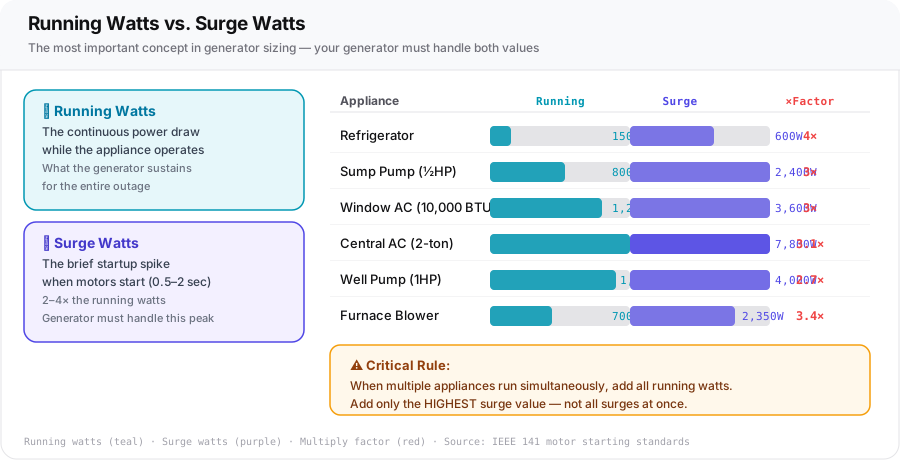
Understanding which appliances drive your generator requirement is key. In most homes, the largest loads are:
- Central air conditioning (3-ton): 3,000–4,000W running, 10,500–14,000W surge — the biggest constraint for most homes
- Electric dryer: 5,000–6,000W — completely impractical to run on a portable generator
- Electric water heater: 4,000–5,500W — often skipped; hot water in the tank lasts 2–4 hours without power
- Well pump (1 HP): 750W running, 2,100–2,400W surge — critical if you're on well water
- Sump pump: 800W running, 2,400–3,150W surge — critical during storms
- Refrigerator: 150–300W running, 600–1,200W surge — always a priority
The electric dryer and water heater are almost always dropped from emergency generator lists. Gas dryers and water heaters only need a small amount of electricity (for ignition and controls), making homes with gas appliances far easier to power with a smaller generator.
Generator Sizing Rules for Homeowners
The 80% Load Rule — NEC Article 220
Generator Size for Home: Portable vs. Standby
When to Choose a Portable Generator
The decision between a portable and standby generator is one of convenience vs. cost. Here's a straightforward comparison:
| Factor | Portable Generator | Standby Generator |
|---|---|---|
| Cost | $500–$2,500 | $5,000–$15,000+ installed |
| Installation | None (use extension cords or transfer switch) | Professional installation required |
| Startup | Manual (pull-start or electric start) | Automatic (within 10–30 seconds) |
| Fuel | Gasoline, propane, or dual-fuel | Natural gas or propane (permanent supply) |
| Size range | 1,000–12,500W typical | 7,500–20,000+ watts |
| Runtime | 8–12 hours per tank | Unlimited (on-demand fuel) |
| Best for | Occasional outages, flexibility | Frequent outages, medical needs, convenience |
What Generator Features Matter Most for Home Use
Electric Start and Remote Monitoring
Once you've determined the wattage you need, look for these features:
- Electric start: Push-button starting is worth the extra cost for home backup use. Pull-starting a cold generator at 2am in a storm is no fun.
- Low-oil shutdown: Automatically shuts the generator off if oil level is too low, protecting the engine.
- GFCI outlets: Ground fault circuit interrupters protect against electrical shock — required for outdoor use.
- Fuel gauge: Know when you're running low before the generator stops unexpectedly.
- CO shutoff: Newer generators have carbon monoxide sensors that automatically shut off the engine if unsafe CO levels are detected.
- Inverter technology: If you need to power computers, TVs, or other electronics, look for a generator with inverter technology that produces “clean power” with stable voltage and frequency.
Don't Forget the Transfer Switch
Manual vs. Automatic Transfer Switch
A transfer switch is not optional — it's legally required in most jurisdictions and critically important for safety. Without a transfer switch, connecting a generator to your home's wiring (even through a dryer outlet or a “suicide cord”) sends electricity back onto utility lines, creating a deadly hazard for lineworkers and your neighbors.
A manual transfer switch costs $200–$600 installed by a licensed electrician and lets you choose which circuits receive power. An automatic transfer switch (ATS) costs $500–$1,500 installed and automatically switches your home to generator power within seconds of detecting an outage — ideal for standby generators.
Many homeowners use a transfer switch interlock kit ($75–$150) instead of a full transfer switch. This is a code-compliant metal bracket that physically prevents both your main breaker and generator breaker from being on simultaneously. It's DIY-friendly and allows manual selection of circuits.
For help sizing your whole-house standby generator, see our whole house generator size calculator.
What Size Generator to Run a House?
The size generator you need to run a house depends on whether you want to power essential circuits only or the whole home including central AC. These are very different requirements:
| Coverage Level | What's Included | Generator Size |
|---|---|---|
| Bare essentials | Fridge, lights, phone charging | 2,000–3,500W |
| Critical circuits | Essentials + sump pump + furnace blower | 5,000–7,500W |
| Comfortable backup | Critical circuits + window AC + TV | 7,500–10,000W |
| Whole-home portable | Everything except central AC + electric dryer | 10,000–12,500W |
| Whole home + central AC | Full standby coverage | 12,000–22,000W+ |
For most homeowners, a 5,000–7,500 watt generator is the sweet spot — it handles every essential circuit during an outage without the cost or fuel consumption of a larger unit. Size up to 10,000W if you want to include a window AC unit, or jump to a 14–20 kW standby if you need central AC coverage.
What Size Generator for 200 Amp Service?
Your home's amp service (the size of your electrical panel) relates to generator sizing, but the connection is not direct. A 200 amp service means your home can draw up to 200 amps × 240 volts = 48,000 watts — but no generator powers your entire service panel simultaneously. You're sizing for the loads you actually intend to run, with a transfer switch controlling which circuits receive generator power.
| Service Size | Typical Home Size | Essential Backup | Full Standby |
|---|---|---|---|
| 100 amp service | Under 1,200 sq ft | 3,500–5,000W | 8,000–10,000W |
| 150 amp service | 1,000–1,800 sq ft | 5,000–7,500W | 10,000–14,000W |
| 200 amp service | 1,500–3,000 sq ft | 7,500–10,000W | 14,000–20,000W |
| 300–400 amp service | 3,000+ sq ft / all-electric | 10,000–15,000W | 20,000–30,000W+ |
For a 200 amp service home, the most common standby generator sizes are 14 kW–20 kW (Generac Guardian 14kW, 18kW, or 20kW). These cover most loads including central AC without requiring a full-load transfer switch. For detailed sizing, see our generator size for 200 amp service guide.
Whole House Generator Cost Estimate
Budget for both the generator unit and installation. Costs vary significantly by generator size, fuel type, and your local market:
| Generator Type | Unit Cost | Installation | Total Installed |
|---|---|---|---|
| Portable 5,000–7,500W | $700–$1,200 | $300–$800 (transfer switch) | $1,000–$2,000 |
| Portable 10,000–12,500W | $1,000–$2,000 | $400–$1,000 (transfer switch) | $1,400–$3,000 |
| Standby 10–14 kW | $3,500–$5,000 | $3,000–$5,000 | $6,500–$10,000 |
| Standby 16–22 kW | $5,000–$7,500 | $4,000–$6,500 | $9,000–$14,000 |
| Standby 22–30 kW | $7,500–$12,000 | $5,000–$8,000 | $12,500–$20,000 |
Installation costs include the automatic transfer switch, electrical labor, gas line extension, concrete pad, and permits. Get at least three quotes from licensed electricians — installation costs vary by 40–60% across contractors in the same market. Use our generator cost estimator to project 10-year total ownership costs.
Generator Size Chart by Home Type
This quick-reference generator size chart covers the most common home configurations. All wattages include the recommended 20–25% safety margin:
| Home / Scenario | Key Loads | Min Size | Recommended |
|---|---|---|---|
| Small apartment / condo | Fridge, lights, devices | 2,000W | 3,500W |
| Small house (under 1,200 sq ft) | Essentials + sump pump | 4,000W | 5,500W |
| Medium house (1,200–1,800 sq ft) | Essentials + window AC | 6,500W | 8,500W |
| Large house (1,800–2,500 sq ft) | Essentials + 2-ton central AC | 12,000W | 14,000W |
| Very large house (2,500–4,000 sq ft) | All circuits + 3-ton central AC | 18,000W | 20,000W |
| RV (with AC) | AC, appliances, lights | 2,500W | 3,500W |
| Job site | Tools, compressor, lights | 7,500W | 10,000W |